Significant Weather – The Ultimate Storm Chasing Guide
Master the art of tornado hunting with expert safety protocols, professional equipment recommendations, and proven photography techniques.
The Thrill of the Chase
Storm chasing, the deliberate pursuit of severe weather phenomena, has evolved from a niche scientific endeavor to a popular hobby, attracting individuals driven by a mix of curiosity, adventure, and a passion for meteorology. While the dramatic imagery of Hollywood blockbusters like “Twister” has fueled public interest, the reality of storm chasing is a multifaceted activity that intersects with science, technology, and a vibrant community of enthusiasts.
From Scientific Pursuit to Popular Hobby
The roots of storm chasing are deeply embedded in scientific research. In 1972, the University of Oklahoma and the National Severe Storms Laboratory (NSSL) initiated the Tornado Intercept Project, a pioneering effort to gather data on tornadoes and supercell thunderstorms. This project, along with the subsequent VORTEX projects, laid the groundwork for our modern understanding of severe weather and demonstrated the value of in-field research.
The popularization of storm chasing was significantly propelled by media exposure, including the 1996 film “Twister” and the Discovery Channel series “Storm Chasers”. The advent of the internet and social media further democratized the hobby, providing access to weather data, fostering online communities, and allowing chasers to share their photos and videos with a global audience.
Essential Equipment Guide
Core Equipment Categories
| Category | Essential Items | Budget Range | Recommended Models |
|---|---|---|---|
| Navigation & Weather | Laptop, RadarScope, GPS, Mobile Internet | $1,500 – $3,000 | Lenovo Gaming Laptop, Verizon Jetpack |
| Photography | DSLR/Mirrorless Camera, Lenses, Tripod | $2,000 – $5,000 | Canon EOS R, Nikon D850, Sony A7R |
| Safety Equipment | First Aid Kit, Emergency Radio, Flashlight | $200 – $500 | Ham Radio, Weather Radio, Emergency Kit |
| Vehicle Setup | Laptop Mount, Cell Booster, Power Inverter | $500 – $1,200 | RAM Mounts, WeBoost Drive Reach |
Technology Setup
Modern storm chasers rely heavily on technology for both safety and success. The backbone of any chase setup includes a laptop with high-resolution radar software like GRLevel3, mobile internet from multiple carriers for redundancy, and GPS navigation systems. Professional chasers often use RadarScope for real-time weather data, which provides superior resolution compared to consumer weather apps.
Communication equipment is equally critical. Ham radios allow chasers to coordinate with spotters and emergency services, while cell phone boosters ensure connectivity in rural areas where storms commonly develop. A reliable power management system with inverters and backup batteries keeps equipment running during long chase days.
Safety Protocols & Best Practices
Critical Safety Warning
Storm chasing involves significant risks including lightning strikes, large hail, flash flooding, and tornadoes. Never chase storms without proper training, equipment, and understanding of meteorology. Always prioritize safety over getting the shot.
The 10 Golden Rules of Storm Chasing
- Always have an escape route planned before approaching any storm
- Maintain at least 1-2 mile distance from tornadoes at all times
- Never core-punch (drive through the storm’s intense precipitation area)
- Monitor multiple data sources: radar, spotter reports, and visual conditions
- Keep your fuel tank above half-full during active chase periods
- Inform someone of your chase plans and check in regularly
- Avoid chasing at night unless you have extensive experience
- Never stop on highways or block emergency vehicle access
- Respect private property and local communities
- When in doubt, err on the side of caution and retreat
Risk Assessment & Management
Professional storm chasers conduct thorough risk assessments before every chase. This includes analyzing the forecasted storm mode, terrain considerations, road networks, and population density. High-risk scenarios include storms in heavily forested areas, mountainous terrain, or densely populated regions where escape routes are limited.
Lightning poses one of the greatest dangers to storm chasers, with strikes possible up to 10 miles from a thunderstorm. Large hail can cause vehicle damage and injury, while flash flooding can make roads impassable within minutes. Understanding these hazards and maintaining situational awareness is crucial for safe storm chasing.
Photography Techniques & Camera Settings
Camera Settings for Storm Photography
Recommended Settings
- Mode: Aperture Priority (A/Av) or Manual
- Aperture: f/5.6 to f/8 for optimal sharpness
- ISO: 400-800 (higher in low light conditions)
- Shutter Speed: 1/160s minimum for handheld shots
- Focus: Manual focus set to infinity
- White Balance: Daylight or custom for color accuracy
Lens Selection Strategy
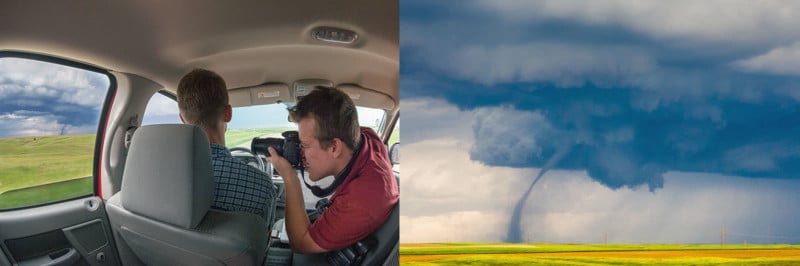
Lens choice depends on your distance from the storm and desired composition. Wide-angle lenses (14-35mm) capture the entire storm structure and surrounding landscape, ideal when positioned close to supercells. Telephoto lenses (70-200mm, 100-400mm) allow safe documentation from greater distances and provide dramatic compression effects.
Professional storm photographer Jim Reed recommends the versatile 24-70mm f/2.8 lens for most situations, offering flexibility to quickly adjust composition as storms evolve. Prime lenses like the 14mm f/2.8 excel for capturing the full scope of supercell structures when positioned safely nearby.
Composition & Timing
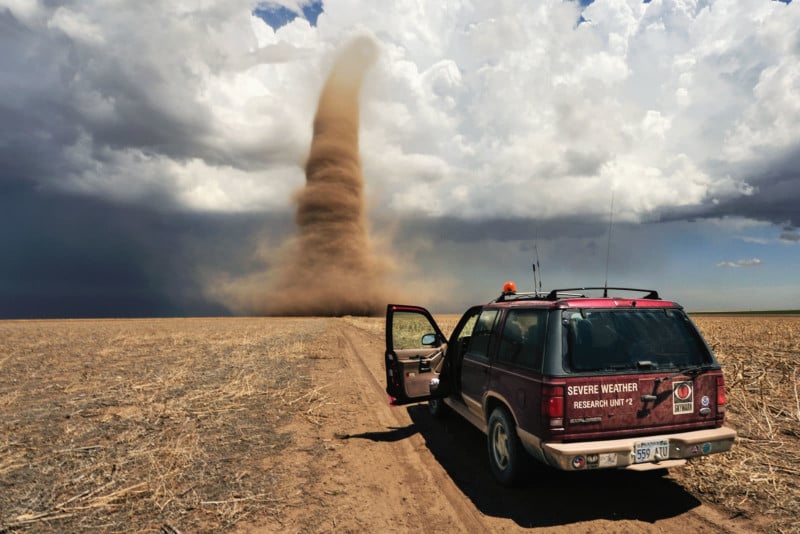
Successful storm photography requires understanding storm structure and evolution. The most photogenic moments often occur during the mature stage when contrast between the dark storm base and surrounding sky is maximum. Including foreground elements like vehicles, roads, or structures provides scale reference for massive storm systems.
Golden hour and blue hour provide optimal lighting conditions, with warm sunlight creating dramatic contrast against dark storm clouds. However, the brief duration of most tornadoes (average 10 minutes) means photographers must be prepared to shoot in various lighting conditions throughout the day.
Getting Started: Your Storm Chasing Journey
30-60-90 Day Roadmap
First 30 Days
- Study basic meteorology and storm types
- Download RadarScope and practice interpretation
- Join online storm chasing communities
- Research local spotting groups
- Begin equipment research and budgeting
Days 31-60
- Attend storm spotter training classes
- Purchase basic equipment (radar app, GPS)
- Practice storm structure identification
- Connect with experienced local chasers
- Plan first supervised chase experience
Days 61-90
- Complete vehicle preparation and safety kit
- Join organized storm tour or mentor program
- Practice photography in various conditions
- Develop personal safety protocols
- Plan first independent local chase
Education & Training Resources
Formal meteorological education provides the foundation for safe and successful storm chasing. The National Weather Service offers free Skywarn storm spotter training programs throughout tornado season. These courses cover storm identification, safety protocols, and proper reporting procedures.
Online resources include university meteorology courses, specialized storm chasing workshops, and mentorship programs. The Storm Prediction Center website offers comprehensive educational materials on severe weather forecasting and storm structure. Many experienced chasers recommend starting with local storms before attempting multi-day chase trips to Tornado Alley.
Building Your Network
The storm chasing community is remarkably welcoming to newcomers who demonstrate respect for safety and learning. Online forums like Stormtrack.org connect chasers worldwide, while local storm spotter groups provide hands-on experience. Social media platforms facilitate real-time coordination and knowledge sharing during active weather events.
Many successful chasers started by joining organized storm tours, which provide expert guidance while building confidence and skills. These tours offer structured learning environments with professional meteorologists and experienced photographers, making them ideal for beginners serious about pursuing the hobby safely.
The Science Behind Storm Chasing
Understanding Supercell Thunderstorms
Supercells are the most dangerous and photogenic thunderstorms, characterized by rotating updrafts called mesocyclones. These storms can persist for hours, producing large hail, damaging winds, and tornadoes. Understanding supercell structure is crucial for safe positioning and successful photography.
The classic supercell consists of distinct regions: the updraft area where warm, moist air rises rapidly; the downdraft region where cool, dense air descends; and the forward flank where the storm moves. Storm chasers typically position themselves in the “bear’s cage” – the relatively safe area southeast of the mesocyclone with good visibility of the storm’s structure.
The VORTEX Research Legacy
The VORTEX projects (Verification of the Origins of Rotation in Tornadoes Experiment) represent the most ambitious tornado research efforts in history. VORTEX-1 (1994-1995) and VORTEX-2 (2009-2010) deployed teams of scientists with mobile radars, weather stations, and measurement probes to study tornadogenesis – the process by which tornadoes form.
These projects revolutionized our understanding of tornado formation and contributed to improved warning systems. The research showed that tornado development involves complex interactions between the storm’s mesocyclone, rear-flank downdraft, and low-level wind shear. This scientific foundation helps modern storm chasers make informed decisions about storm behavior and evolution.
Meteorological Forecasting
Successful storm chasing begins with accurate forecasting, analyzing atmospheric conditions favorable for severe weather development. Key parameters include CAPE (Convective Available Potential Energy), wind shear, and moisture content. The Storm Prediction Center issues daily outlooks identifying areas with highest severe weather probability.
Modern forecasting tools provide unprecedented detail about atmospheric conditions. High-resolution models can predict storm initiation locations within 50-100 miles, while real-time surface observations help identify subtle changes that trigger storm development. Understanding these tools enables chasers to position themselves optimally for intercept opportunities.
Community & Resources
Online Communities
Essential Websites
- • Stormtrack.org – Premier chaser forum
- • Storm Prediction Center – Official forecasts
- • National Severe Storms Laboratory
- • Spotter Network – Real-time chaser positions
- • Weather Underground – Community forecasting
Social Media Groups
- • Storm Chasing Facebook Groups
- • Twitter Weather Community
- • Instagram Storm Photography
- • YouTube Educational Channels
- • Discord Real-time Chat Servers
Professional Development
Many storm chasers transition their passion into professional careers in meteorology, emergency management, or media. Broadcasting meteorologists often have storm chasing backgrounds, providing real-world experience that enhances on-air credibility. Emergency management agencies value storm spotters who can provide ground-truth observations during severe weather events.
The photography and videography skills developed through storm chasing transfer to various commercial applications. Many chasers supplement their income through stock footage sales, tour guide services, or scientific data collection. However, making a full-time living from storm chasing alone remains challenging and requires diversified income streams.
Ethical Considerations
Responsible storm chasing involves respecting local communities, private property, and emergency responders. Chasers should never impede evacuation routes or emergency operations. The surge in storm tourism has led to congestion issues in some areas, requiring increased awareness of our collective impact on rural communities.
Environmental stewardship is increasingly important as extreme weather events become more frequent and intense due to climate change. Many chasers contribute to citizen science projects, collecting data that advances our understanding of severe weather and helps improve public safety through enhanced warning systems.
Frequently Asked Questions
How much does it cost to get started in storm chasing?
Entry-level storm chasing can begin with $500-1000 for basic equipment (RadarScope app, GPS, emergency kit, camera). A serious setup with laptop, radar software, and quality camera equipment ranges from $3000-7000. Vehicle modifications and long-distance travel add additional costs.
Is storm chasing dangerous?
Storm chasing involves inherent risks including lightning, hail, flooding, and tornadoes. However, with proper training, equipment, and safety protocols, experienced chasers maintain relatively low accident rates. Most injuries result from vehicle accidents rather than storm encounters. Never chase without adequate preparation and experience.
What’s the best time of year for storm chasing?
Peak tornado season runs from April through June, with May typically offering the highest activity levels. The last two weeks of May are considered prime time for Tornado Alley chasing. However, significant storms can occur from March through July, with regional variations across different parts of the United States.
Do I need meteorology training to chase storms?
While formal meteorology education isn’t required, understanding basic weather principles is crucial for safety. At minimum, complete Skywarn spotter training and learn to interpret radar data. Many successful chasers are self-taught but invest significant time studying storm structure, forecasting, and safety protocols.
What vehicle is best for storm chasing?
Any reliable vehicle can work for storm chasing, but considerations include fuel efficiency for long drives, good visibility, and room for equipment. Many chasers prefer SUVs or pickup trucks for ground clearance on rural roads. More important than vehicle type are good tires, reliable navigation, and proper equipment mounting systems.
Can you make money storm chasing?
Very few people make a living solely from storm chasing. Income sources include stock footage sales, tour guide services, scientific data collection, and media contributions. Most chasers spend more on their hobby than they earn. Consider it primarily a passion pursuit rather than a business opportunity.
How close can you safely get to a tornado?
Experienced chasers typically maintain 1-2 mile minimum distances from tornadoes, with greater distances for stronger storms or poor visibility conditions. Factors affecting safe distance include terrain, escape routes, storm motion, and tornado intensity. When in doubt, maintain greater distance and prioritize safety over photography.
What camera equipment do I need for storm photography?
A weather-sealed DSLR or mirrorless camera with 24-70mm and 70-200mm lenses covers most storm photography needs. Include a sturdy tripod, extra batteries, and lens protection from hail. Budget cameras can produce excellent results – technique and positioning matter more than expensive equipment.
Stay Updated
Get the latest storm chasing tips, safety updates, and photography techniques delivered to your inbox.